
Turning Association Data into Actionable Insights: Lessons from ASAE’s Christin Berry

How Can Associations Turn Data Into Action?
Associations are awash in data—but are they making the most of it? In this episode of The Member Engagement Show, ASAE’s Christin Berry, CAE, joins Higher Logic’s Kelly Whelan to discuss how associations can transform data into meaningful insights that drive engagement, retention, and strategic growth.
Berry, ASAE’s Vice President of Business Analytics and Data Services, shares how her organization is evolving from simply publishing reports to delivering “insights as a service.” The conversation explores how associations can interpret data, use AI tools effectively, and build a culture of curiosity and continuous learning.
Key Points Summary
- Associations must move from raw data to actionable insights.
- AI tools like ASAE’s Stellar and Higher Logic Thrive’s community chatbot make data more accessible.
- The best data sparks curiosity and better questions, not just answers.
- Culture matters: empower staff to use data without fear of being “wrong.”
- Start with metrics that align to organizational goals, and layer data with context and human insight.
1. From Reports to Real-Time Insights
Traditional benchmarking reports and static data sets are no longer enough. According to Berry, associations need to move beyond “just providing the number” to helping members understand what benchmark numbers and trend data means—and how to act on it.
“We’re not just saying the number is seven,” Berry explained. “We’re helping members decide whether that number should go up or down—and how to make it happen.”
ASAE’s “Insights as a Service” initiative reflects this mindset shift: “his was a board supported initiative where we’re trying to help our members in the association community more quickly make decisions, you know, using the information that they have.” So, rather than handing off data for members to interpret on their own, they aim to provide context, recommendations, and connections to outside experts.
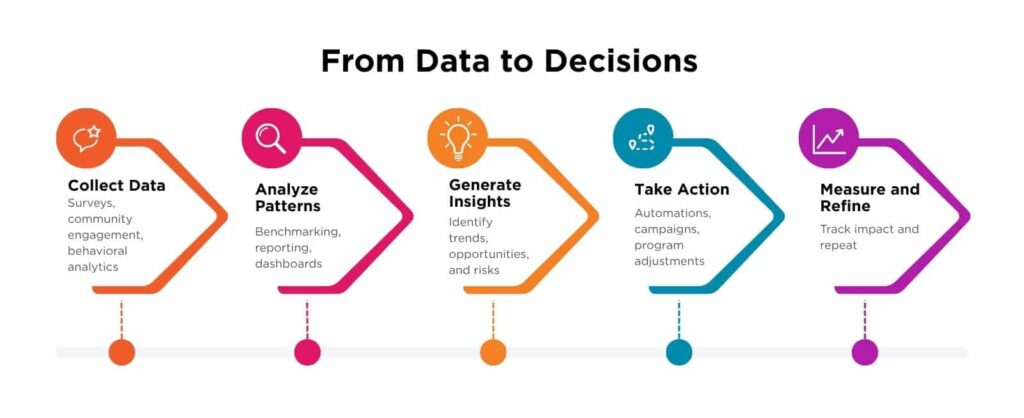
For association leaders, this approach underscores the value of interpreting data through an operational lens. Instead of asking “what’s the metric,” ask “what does this tell us about how our members engage—and what can we do next?”
2. Data Everywhere: Finding Meaning Beyond the Spreadsheet
Berry noted that she now sees data “everywhere”—not just in reports or dashboards, but in conversations, volunteer projects, and behavioral patterns across communities.
Higher Logic’s Kelly Whelan pointed out how associations can leverage behavioral data from tools like Higher Logic Thrive, which captures how members engage with content, communities, and events.
When associations pay attention to what members actually do—not just what they say—they gain more accurate insights. As Berry put it, “The best data makes you ask a better question.”
That curiosity is crucial. Whether it’s comparing engagement trends or watching where users click, small patterns often reveal larger truths about what drives value for members. But another key component is context.
Context is what makes actionable intelligence possible. Data alone doesn’t make decisions. Sometimes association staff need to take a leap and make strategic decisions to move the organization forward. For example, Whelan shared an example of how members of her organization repeatedly advocated to keep a print conference guide, but the organization ultimately needed to shift to an app to improve efficiency and reallocate costs to better conference experiences rather than wasting time and paper on 200-page guides that often went unused.
3. Making Data Accessible Through AI and Automation
One of ASAE’s most innovative projects is Stellar, a private large-language-model (LLM) that allows users to ask natural questions and get answers directly from ASAE’s body of knowledge.
This AI-driven approach helps members—and even internal staff—find information quickly without needing to know where it lives. The way people (including association members) look for and consume information is changing:
“People just want answers,” said Berry. “They may not know which benchmarking report the data comes from, and they shouldn’t have to.”
By surfacing insights instantly, tools like Stellar and Higher Logic’s AI Search Assistant (which is available within our community platform at no additional cost) enhance accessibility and awareness. They connect members to resources while still driving visibility for full reports and deeper content.
Berry also highlighted how LLMs with retrieval-augmented generation (RAG), like Higher Logic’s AI Search Assistant, can increase—not decrease—engagement with resources and member benefits:
“We don’t think the large language model will cannibalize our products. It gives members quick answers, but also shows them where the data came from. That builds awareness of our reports.”
It’s also important to think about multi-format content strategies from the start – and AI can help you here too, making it easier to repurpose long-form content into other formats. When creating publications, simultaneously plan for webinars, written fact sheets, and interactive tools.
For associations, this is a reminder that AI can amplify—not replace—human insight and encourage exploration rather than shortcuts.
4. Building a Culture of Curiosity and Context
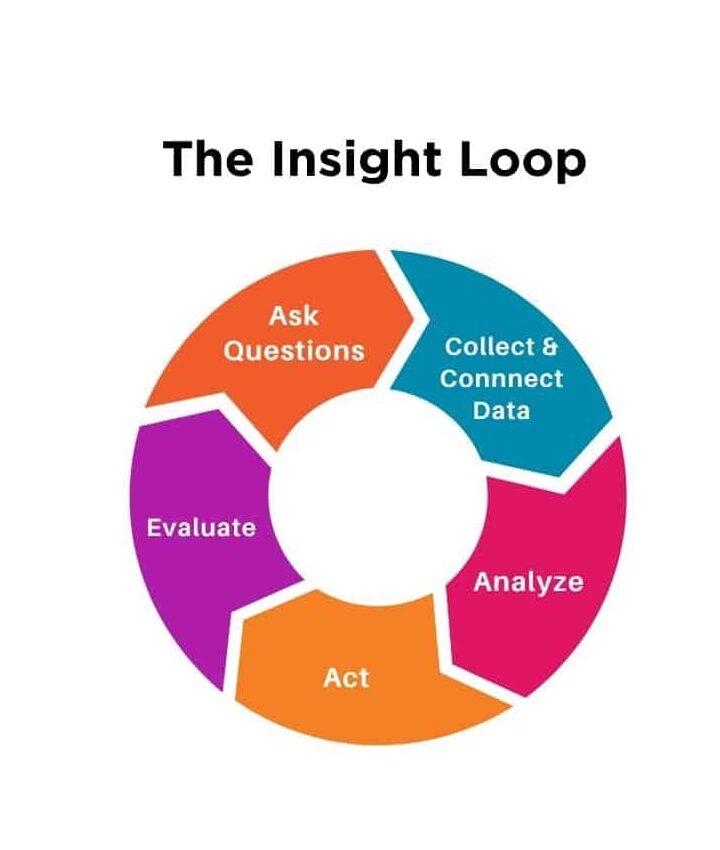
Both Berry and Whelan emphasized that data alone doesn’t make decisions—people do. The most valuable organizations are those that pair analytics with strategic context and a healthy dose of curiosity.
When staff feel empowered to question trends and test ideas, data becomes a tool for innovation rather than intimidation.
Whelan noted, “You want people to notice things and raise their hand if something seems off. Curiosity should be encouraged, not punished.”
Berry agreed, adding that she looks for curiosity as a key competency:
“The most successful association professionals I know are naturally curious. They ask, ‘What if we tried this?’ or ‘What might happen if we changed that?’”
Creating a data-driven culture means giving people space to explore and experiment, supported by leadership that values evidence-based decision-making over gut instinct alone.
6. Integrated Technology Strengthens Data-Driven Association Strategy
Turning data into usable insights is a lot easier when you have technology that supports, not complicates, your data goals. Sometimes sticking with the technology or process you’ve always had can seem safer, easier, or cheaper. But the reality you’re incurring hidden costs – as the concept of “technical debt,” or “tech debt” outlines, putting off infrastructure improvements often “borrows time” now, but “owes effort.” And costs build up – from missed opportunities to provide member value, to financial costs incurred maintaining outdated systems, to high staff turnover from the frustration of not having the resources to succeed.
Strong association systems should capture both behavioral and traditional metrics, with content organized for easy access by people and AI. Establish simple, repeatable processes for reviewing insights—monthly or quarterly—to encourage analysis without overwhelming staff.
It’s also helpful to track both quantitative (usage rates, satisfaction scores, decision speed) and qualitative outcomes (better member experiences, stronger decisions, more confident teams). Focus on trends, not outliers—avoid making big decisions on small or unrepresentative samples.
And, perhaps most importantly, break down silos wherever you can by centralizing data into shared repositories accessible to both staff and AI tools. Use consistent taxonomy and automated tagging—like the AI-powered tagging in Higher Logic Thrive—to make content discoverable and insights actionable across platforms.
5. Practical Steps: Prioritize, Simplify, and Personalize
Associations can feel overwhelmed by the sheer volume of data available. Berry advises starting small: focus on the metrics that align directly with organizational goals.
- Prioritize key outcomes. If member retention is a priority, study engagement patterns and identify what activities correlate with renewals.
- Simplify what you share. Visual cues like trend arrows or “percent change” graphics help busy readers grasp meaning quickly.
- Personalize insights. Use automation and segmentation to tailor follow-ups, such as reminding members about certification programs when they’re likely seeking career advancement.
Higher Logic Thrive’s automation tools make this easier, enabling associations to deliver timely, relevant communications based on real member behaviors.
Ultimately, Berry advises associations to “use all the data available—but layer it with strategy, context, and human judgment.”
Conclusion: Blending Human and Data Intelligence
So, what should association leaders takeaway from this episode? Data is powerful, but only when it’s paired with human insight. Associations that foster curiosity, adopt smart AI tools, and connect data back to strategy can transform numbers into meaningful action.
As Berry summed up, “Don’t forget the human element. Data is just one part of the puzzle—use your network, your colleagues, and your community to make it richer.”
By combining analytics, technology, and collaboration, associations can create the kind of personalized, insight-driven experiences members now expect.
Related Resources

Member Data Success Kit
Your member data is one of your most valuable resources. Learn how to use it to improve the member experience...
Read More
Association Success Series: Why Your Data Matters & What You Can Do With It
During this webinar, data experts Christin Berry from ASAE, and David Jovel from Higher Logic share how associations can harness...
Read More
How do I… use member data?
Understanding and using member data is essential for associations to personalize engagement, improve member retention, and make informed decisions
Read More